Showing posts with label Middle Eastern. Show all posts

Wednesday, February 8, 2012

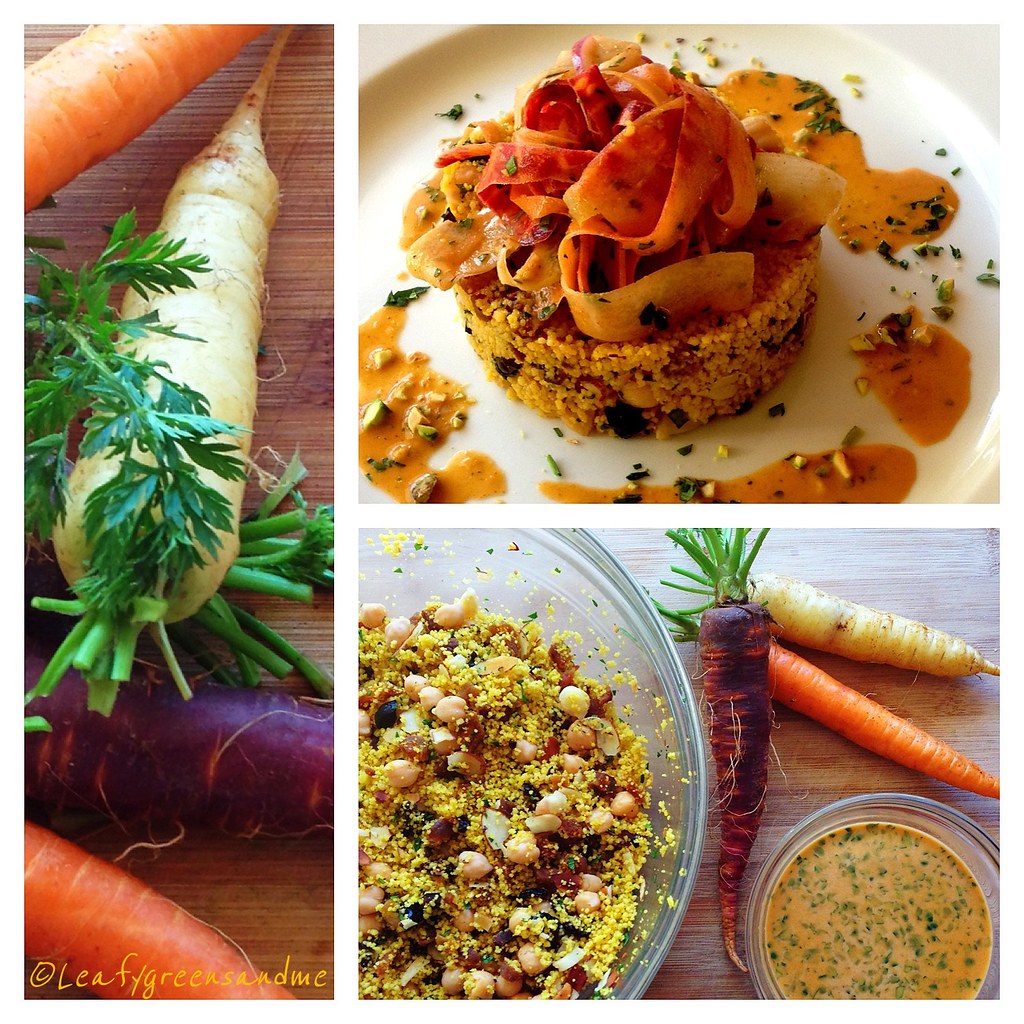
Moroccan Carrot Salad with Saffron Couscous

We are having beautiful spring-like weather in the Bay Area--68 degrees today and 72 tomorrow and I have spring-fever big time!  Spring always reminds me of carrots and so I couldn't pass up getting a bunch of beautiful tri-color (purple, cream and orange) carrots at the market today.


With carrots this sweet and tender I didn't want to cook them and so I shaved them into thin ribbons and tossed them with a Moroccan Vinaigrette made with freshly squeezed orange juice, lemon juice, sherry vinegar, cumin, coriander, paprika, ginger, garlic, cilantro and olive oil.  I then made a whole wheat couscous with saffron, dried apricots, almonds, pistachios, oil cured olives, preserved lemon and chickpeas.  So easy, fresh and delicious--perfect for a day like today!

Thursday, December 8, 2011

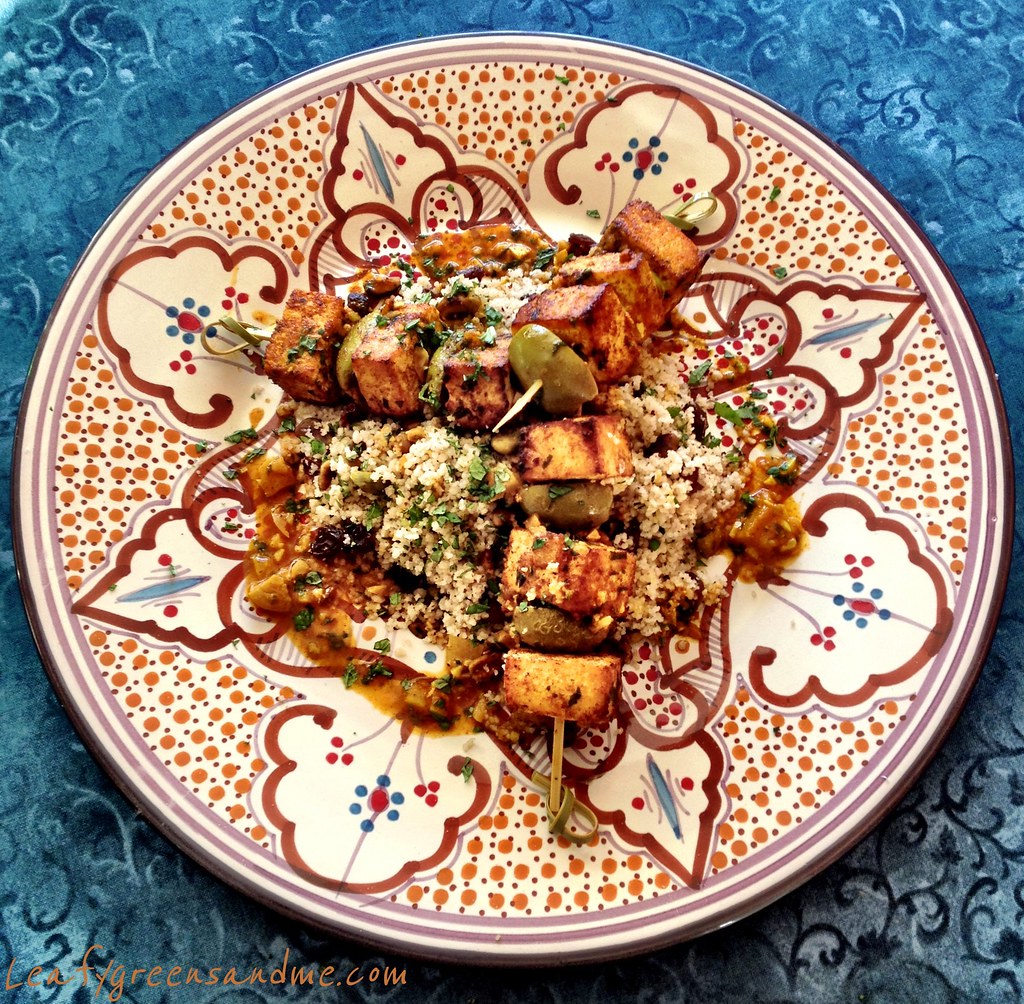
Moroccan Marinated Tofu with Fruity Couscous

I love North African, Middle Eastern and Mediterranean cuisine.  The combination of flavors are amazing, especially when you mix several regions together to create a dish that is spicy, sweet, and tangy.  I know from my photo it's hard to see, but the tofu has been marinated and then threaded on wooden skewers, pan seared and then served over the couscous.  The plate I used has a lot of detail and makes it hard to see the food, but I love my Moroccan plates and use them whenever I can!
 

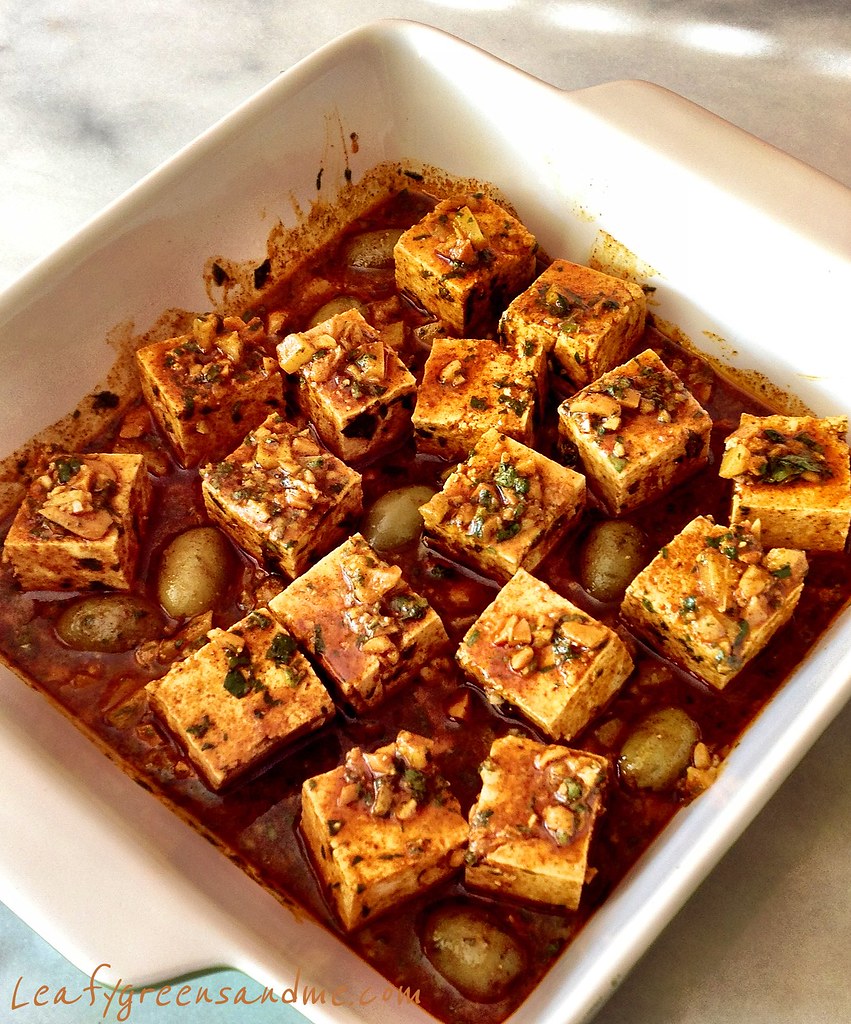
To marinate the tofu, I used extra firm tofu and pressed it for about an hour to remove any excess moisture.  I then made a marinade using ground cinnamon, turmeric, cumin, pimenton, saffron, fresh garlic, chopped marcona almonds, minced preserved lemons, sliced green olives, lemon juice, olive oil, vegetable stock and salt and pepper.  I then marinated the tofu for about an hour and then threaded it on skewers alternating it with sliced olives and then pan seared it until golden brown.

 
For the whole wheat couscous I used toasted pistachios, currants, ground sumac, fresh mint, fresh parsley, olive oil, and salt and pepper.  I then made a sauce with the reserved marinade, adding additional vegetable stock to thin it and simmered it for a few minutes until the garlic was tender.  I then poured the sauce over the tofu, and garnished with additional mint....Just delicious!


Tuesday, August 23, 2011

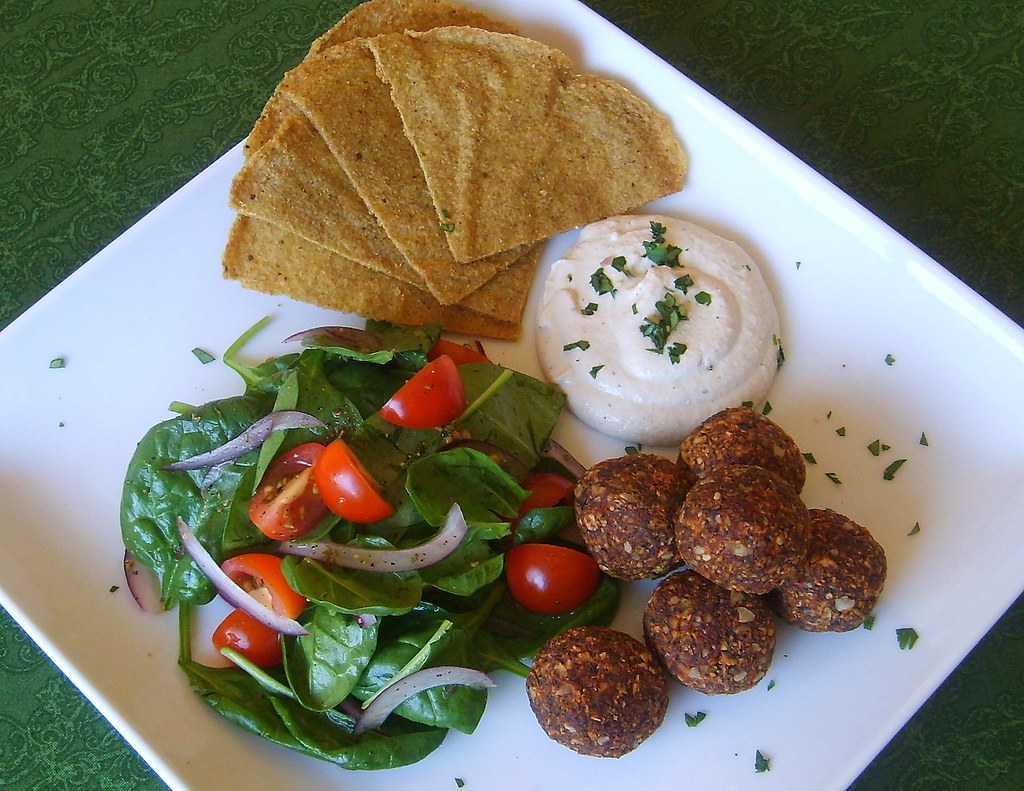
Pumpkin Seed Falafels with Cashew-Tahini Hummus

So my three week of mostly eating raw and gluten free is coming to an end.  I guess that my husband and I ate 90% raw and 100% gluten free for the entire three weeks.  And we were both really quite surprised about how good everything tasted.  My husband kept commenting that he felt so healthy eating this way and that everything was so fresh and flavorful.  Also, unless you stop eating gluten for a period of time, you have no idea how many bread/wheat products you consume on a regular basis.  So needless to say, I am definitely going to incorporate more raw and gluten free dishes into our vegan diet. 

However, there are some challenges with eating raw and also with gluten-free baking.  When preparing raw food you really have to plan ahead, unless of course you're just going to drink smoothies or eat salads.  But if you want to prepare gourmet raw food you need about 2-3 days in order to soak, sprout or dehydrate your ingredients.  It's really a whole new mindset to cooking.  Also, it's quite expensive.  If we were to eat raw full-time I would look into purchasing ingredients such as nuts and seeds through wholesale.  Plus "everything" you purchase "has" to be "organic", so that's an added expense.  Gluten-free cooking isn't difficult at all as long as you read labels carefully and make sure no gluten is lurking in the ingredients.  But baking is another story, but once you start experimenting with different flour combinations you become more confident in the outcome.

Several foods that I missed during the three weeks were:  whole grains, cooked brown rice, any type of cooked beans, tofu, and tempeh.  New techniques/ingredients that I starting using:  making nut milks, sprouting beans, dehydrating ingredients, eating hemp seeds, drinking hemp milk, nama shoyu, goji berries, Celtic sea salt, gluten-free flours and xantham gum.  I have also decided to purchase a Vita-Mix blender.  I have wanted one for the past two years and kept putting it off because I didn't want to spend the money.  Not any longer...I have so many uses for it now that it will pay itself off in no time.  One thing that eating raw has taught me is that I was eating too many prepared and processed foods/ingredients.  From now on, every condiment I use whether it be ketchup, mustard, vegan mayonnaise, sour cream, almond butter, peanut butter, etc., will be made from scratch instead of purchasing it at the store.  I will also cut back on using processed oils as well. 


So for tonight's dinner I wanted to try a recipe for falafels by Russell James, The Raw Chef (you can find the recipe on his website).  His recipe calls for a wrap made out of zucchini and flax meal, but since I don't have a dehydrator, it was very difficult to obtain the right texture for the wrap and it was breaking apart and so I just cut it into smaller pieces.  Also, his recipe called for a macadamia nut hummus, but I made a cashew hummus instead because I didn't want to purchase macadamia nuts at $19/pound.  Anyway, the falafel and hummus had great flavor and texture, and it is very similar to my "cooked" Middle Eastern Falafel Plate that I made previously.

Anyway, I learned so much over the past three weeks and I feel so much healthier by changing my diet.  Also, I hope that you'll try some of the raw or gluten-free recipes that I've posted even if you're not into eating this way.  And if you are interested in raw and gluten-free baking, keep checking back because there will be many more to come!  And once I get my Vita-Mix, I can't wait to start making raw desserts--they look absolutely yummy!   

Sunday, August 14, 2011

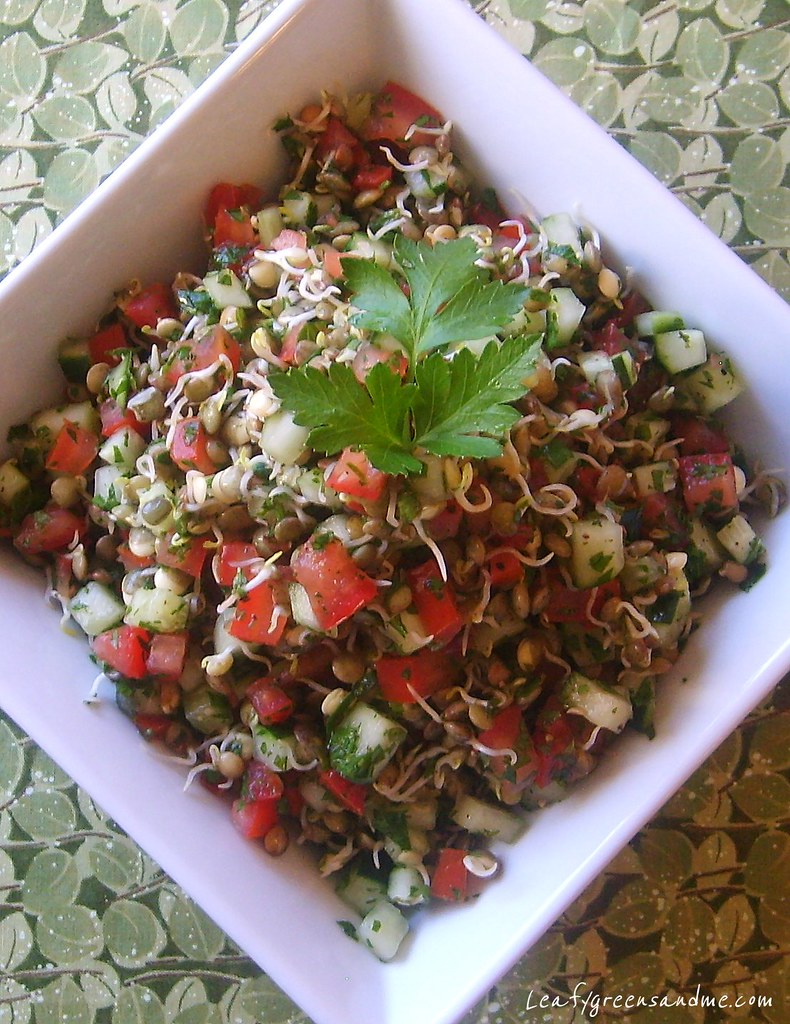
Sprouted Lentil Tabouleh Salad

This is my first experience sprouting lentils and eating them raw.  It requires advance planning, at least 2-3 days, but I was able to make a couple of raw dishes with one cup of dried lentils.  I used French green lentils because I like their shape and color, but brown lentils will also work well.  This salad has amazing texture and you really feel like you're eating something healthy.  I served it with a simple tahini dressing made with lemon, garlic, mint, water and olive oil.  This salad would also be nice served with raw dill flaxseed crackers, but since I don't have a dehydrator, I decided not to make them...perhaps next time.

Sprouting Lentils:
  • Pick through 1 cup of French green lentils to make sure they are free of stones and debris, rinse and soak them in a 2 quart jar for 8-12 hours.
  • Rinse lentils in a strainer and tap to remove excess water.  Place lentils back in the 2 quart jar and position the jar at a 45 degree angle propped up in a bowl so that any remaining water will drain away from the lentils.  Rinse and drain lentils three times a day (morning, late afternoon, late evening), and place back in the jar.  Repeat this process for up to two days until lentils have sprouted.  
  • Rinse and drain lentils again and then place in a sealed container in the refrigerator.  Use lentils within three days of sprouting for maximum freshness.
Salad Ingredients:

3 cups sprouted French green lentils
2 cups small diced Roma tomatoes
2 cups small diced English cucumbers
1 cup finely minced Italian flat leaf parsley
1/2 cup finely minced mint
1/4 cup raw sunflower seeds, soaked for 30 minutes, drained
Juice of 1-2 lemons, or to taste
2-4 tbsp first cold pressed extra virgin olive oil
Sea salt and fresh ground black pepper to taste

Method:
  • In a large bowl mix all ingredients together and season with salt and pepper to taste.
  • Chill in the refrigerator for at least one hour for flavors to combine.
  • Serve with tahini dressing, or dressing of choice.


Friday, July 8, 2011

Dolmades (Stuffed Grape Leaves)

There are a lot of different recipes for Dolmades.  Some recipes add diced tomatoes, currants, pine nuts, cinnamon and allspice to their rice, while others just add fresh herbs and lemon juice.  I've been making this recipe for a long time now. I use it to stuff grape leaves, tomatoes, eggplant and bell peppers.  Sometimes in place of the sunflower seeds I'll add pistachios, or I'll cut back on the herbs and add currents and cinnamon.  Regardless of what I add, it still tastes great wrapped in the briny little package.  Serve the Dolmades with Tzatziki Sauce (below) or my Tahini-Mint Sauce, and of course warm pita bread.  I added a little Zatar (oregano, thyme, sesame seeds and sumac) seasoning for additional flavor.
 
Dolma Filling:

1 1/2 cups brown long grain rice
3 cups filtered water
1 medium onion, diced small
2 stalks celery, diced small
4 cloves garlic, minced
1/3 cup fresh chopped mint leaves
1/4 cup fresh chopped dill sprigs
1/4 cup fresh chopped basil leaves
1/4 cup fresh chopped parsley leaves
1 1/2 tsp dried Greek oregano leaves
1/4 cup roasted sunflower seeds
Juice of 2 lemons
1 tsp kosher salt
1/4 cup black pepper
1/4 cup extra virgin olive oil
2-3 cups vegetable stock
1 2 pound jar of grape leaves
Note:  You'll have a lot of leaves left over with this recipe.  This recipe makes about 20 Dolmades.  I've purchased the smaller 1 pound jars and ended up not having enough leaves because they were torn.

Method:
  • Bring water to a boil, add rice and simmer for about 10 minutes until slightly tender.  Drain really well and set aside.
  • In a large saute pan, cook onions, celery and garlic in 2 tbsp of olive oil until soft.  Add rice, along with dried oregano, fresh herbs, sunflower seeds, salt and pepper to taste and the juice of 1 lemon.  Stir to combine and set aside.
  • Add plenty of water to a large stock pot, and bring it to a rapid boil.  Remove grape leaves from the jar and separate the leaves and drop them in the boiling water and blanch for about one minute.  Remove leaves and drain well.  Sort through the leaves and pick ones that are similar in size and that are not ripped or torn.  Also, remove the stem if there is one.  The remainder of the leaves can be used to line the bottom of the pot to keep the Dolmades from burning while cooking.
  • I then create an assembly line and work with about 10 Dolmades at a time.  I use a small ice cream scooper so that each dolma is about the same size.  
  • Lay the grape leaves with the smooth side down, place a scoop of rice near the base of the leaf and roll up tightly like a burrito.  
  • Once all the leaves are stuffed and rolled, line the bottom of the stock pot with extra leaves and place Dolmades seam side down tightly next to each other, working from the outside of the pan to the center.
  • Add enough vegetable stock to cover the tops of the grape leaves by about 1", about 2-2 1/2 cups.  Add 2 tbsp extra virgin olive oil and the juice on 1 lemon.
  • Place several smaller plates directly on top of the Dolmades to weigh them down so that they don't float and open up while cooking.
  • Cover with a lid, bring to a boil and reduce heat to a simmer and cook for about 1 hour until Dolmades are tender.  They may take longer or shorter to cook depending on how tough the leaves are.  Check during cooking process to make sure that the stock has not evaporated.  Add more if necessary.
  • When finished, remove Dolmades and strain liquid into a small sauce pan.  Add a pinch of dried oregano and reduce sauce by half.  Pour sauce over Dolmades and serve.
Tzatziki Recipe:

8 oz Follow Your Heart Sour Cream
3 cloves garlic, minced
2 cups English cucumbers, diced small
2 tbsp minced dill leaves
1/4 cup minced mint leaves
2 tbsp red wine vinegar
1 tbsp lemon juice
1 tbsp extra virgin olive oil
1 tsp kosher salt
1/4 tsp black pepper

Method:
  • In a small bowl, mix all ingredients together until combined.  Chill until ready to use.


Tuesday, June 28, 2011

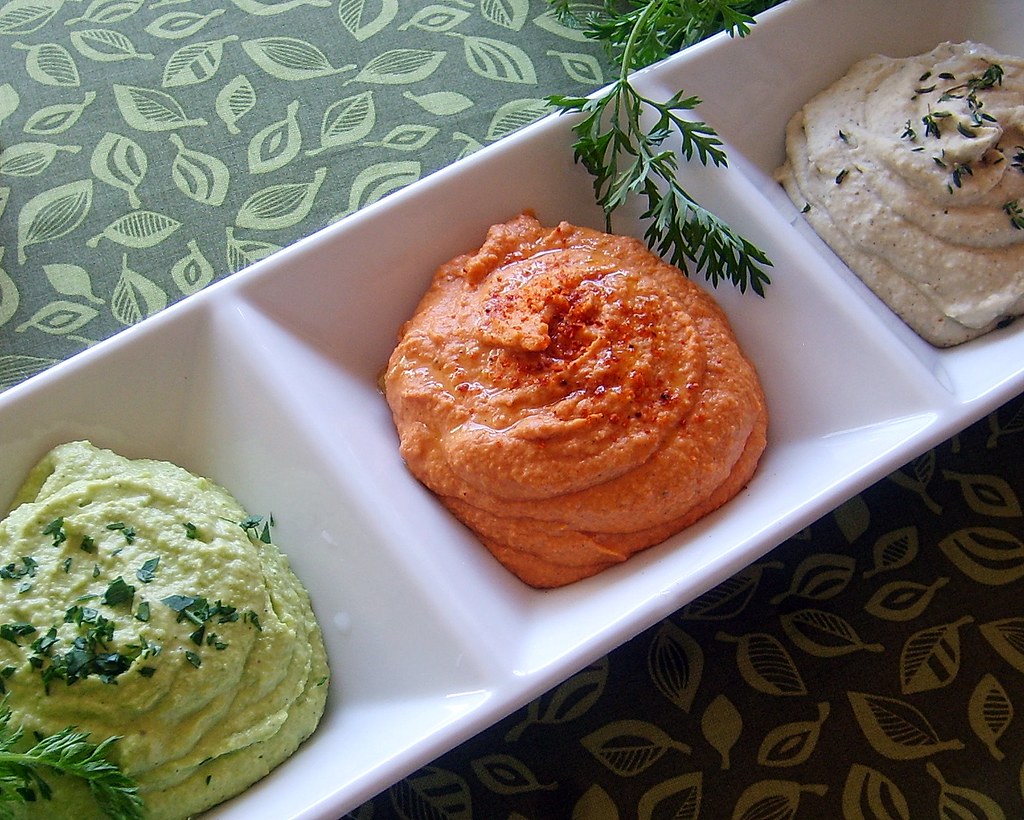
Trio of Hummus

We vegans, we eat a lot of hummus and so I'm always experimenting with different types of beans and seasonings to come up with new flavors.  Some combinations work really well and others don't.  These flavors that I made the other day are good, but not great and so back to the kitchen for some additional tweaking to the recipes.  

The main ingredient in hummus, other than the beans is tahini sauce or paste, and believe it or not the type of tahini you use can make a big difference in flavor and texture.  I have tried all types of tahini from Middle Eastern markets, but for making hummus, I prefer Trader Joe's Tahini Sauce.  It has a really creamy texture and is full of citrus flavor.  However, if I'm adding tahini sauce to a dessert, or for a salad dressing then I prefer Middle Eastern brands, such as Mid East.


I wanted to use three different types of beans and so I used Fava, Garbanzo and Cannellini Beans for different textures and colors.  Of course, all of these are made with fresh garlic, lemon juice, cumin, tahini, olive oil and salt and pepper.  But here's what I would do differently...

Fava Bean Hummus:  

Fava beans have a high starch content and so when they are pureed they turn into a paste and become gummy.  The texture would be fine for spreading on bruschetta and topping with other ingredients, but used as a dip for vegetables I don't like the texture.  Fava's also have a bitter taste and so the next time I make this recipe, I will reduce the fava beans by half and incorporate a broccoli puree.  I would also add some fresh Meyer lemon juice if it's in season.

Roasted Red Bell Pepper Hummus with Aleppo Pepper:

For this hummus, I used garbanzo beans and Aleppo pepper.  Aleppo pepper is named after a city in Syria where the peppers are from.  It is very fruity, and earthy with citrus undertones, and is coarse in texture.  Also the heat is very mild and so next time I will substitute some cayenne pepper and paprika for the Aleppo and also grind it into a finer powder.  The texture was a bit grainy for me.

White Bean Hummus with Roasted Lemon and Zatar:

Trader Joe's has the best white bean hummus around but it's so much cheaper and healthier to make your own.  I really love zatar seasoning (which is a mixture of toasted sesame seeds, dried thyme, oregano and sumac), with cannellini beans, but the roasted lemons were a bit over powering.  So next time I will either add less lemons, or leave them out all together.  I may also consider using preserved lemons, but that takes some planning because the process of preserving takes about month.

I normally don't spend a lot of time in the kitchen perfecting recipes.  Most of the time I make something once and I really like it and never have to change the recipe.  And other times, if it doesn't work out, I may never make it again.  But with hummus, it's so easy, inexpensive and fun to play with different flavor profiles, that I will definitely be making these recipes again. 


Wednesday, June 15, 2011

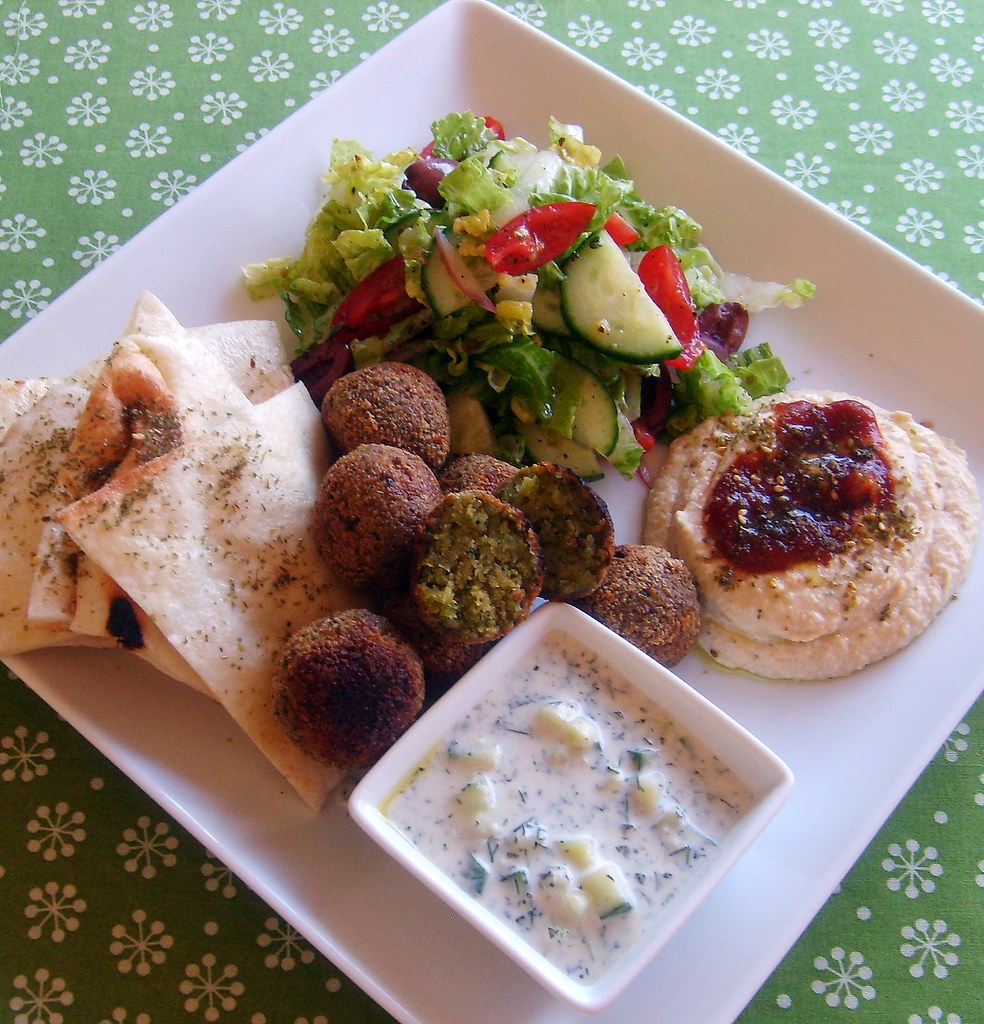
Middle Eastern Falafel Plate

I can't begin to tell you how many falafel recipes I've tried in my lifetime.  I have used boxed mixes from Middle Eastern stores, bulk mixes from health food stores, and made numerous recipes found on the internet and in cookbooks.  And no matter what I do I still can't get the consistency and flavor of my favorite falafel restaurant, The Falafel's Drive-In in San Jose.  There's just something about their falafels--they are crunchy on the outside and fluffy and bright green on the inside. 

In my quest for the perfect falafel recipe, I've used fresh chickpeas in place of dried, added fresh fava beans to dried chickpeas, used cooked chickpeas and tried practically every herb/spice combination.  I have also experimented using peanut oil, canola oil and olive oil for deep frying or pan searing and formed the falafels into disks or balls.  Perhaps I should just give up, or better yet, apply for a job at Falafel's Drive-In to learn their secrets.  In the meantime, I'll just make the drive to San Jose whenever I need my falafel fix!  This recipe is good, but not perfect...so back to the kitchen for me!   


Falafel Ingredients:

2 cups chickpeas, soaked for 24 hours, drained and dried with paper towels
4 garlic cloves, minced
2 scallions, finely chopped
1/4 cup fresh cilantro, chopped
1/4 cup fresh mint, chopped
1/4 cup fresh parsley, chopped
1/4 - 1/2 tsp cayenne pepper
3 tsp ground cumin
4 tsp ground coriander
2 tsp baking powder
1-1/2 tsp kosher salt (or to taste)
1/4 tsp black pepper
1 tbsp olive oil
Juice of 1/2 lemon
1 liter Canola oil for deep frying

Method:
  • Place drained and dried chickpeas in a food processor and pulse until coarsely ground.  Add all other ingredients (except canola oil) and pulse until combined.  Do not grind to a paste, you still want some texture.
  • Using a tsp form mixture into small balls or disks.  I used a small ice cream scooper for consistency.
  • Let falafels balls chill in the refrigerator for about 30 minutes for flavors to combine.
  • Heat oil in a deep dutch oven to 350 degrees.
  • Add falafels in batches and cook until golden brown about 3-4 minutes.
  • Drain on paper towels and keep warm. 
Tzatziki:

8 oz Vegan sour cream (I used Follow Your Heart Brand)
3 cloves garlic, minced
2 cups English cucumber, finely diced
2 tbsp fresh dill, finely minced
1/4 cup fresh mint, finely minced
2 tbsp red wine vinegar
1 tbsp fresh lemon juice
1 tsp kosher salt
1/4 tsp black pepper
Note:  Normally I serve falafels with Tahini Mint Sauce, but I had left over Tzatziki from another dinner and so I used this instead.

Method:
  • Mix together all ingredients in a bowl and refrigerate for at least 30 minutes for flavors to combine.
I served my falafels with homemade hummus garnished with hot sauce and zatar and a cucumber-tomato salad with red wine-oregano vinaigrette.


Friday, June 10, 2011

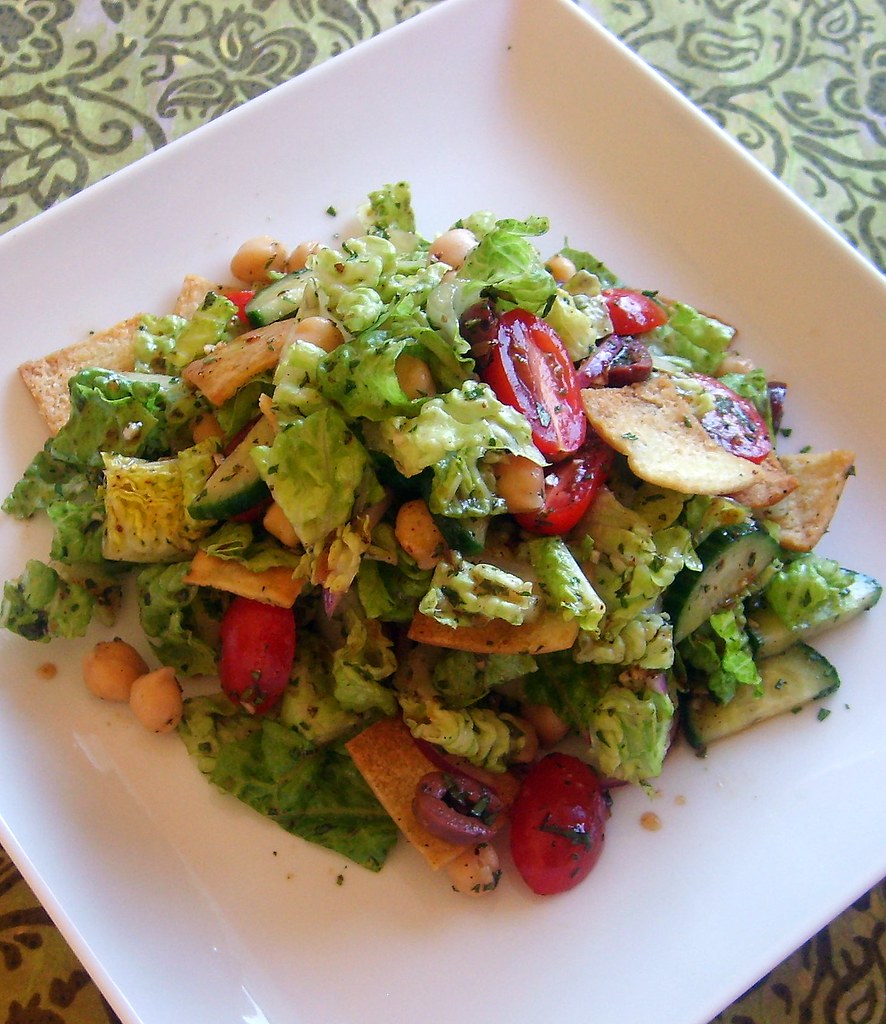
Fattoush Salad with Pomegranate Vinaigrette

Fattoush is my favorite salad to eat in the summer, especially in August when the cherry tomatoes are fresh off the vine.  This salad is very similar to the Italian Panzanella made with fresh basil and crusty bread, but uses fresh mint, cilantro and pita bread instead.   Fattoush salad can be served as a main course, or as a side to your favorite Middle Eastern entree.  I just love the flavors and textures of this salad!


Pomegranate-Sumac Vinaigrette:

2 tbsp pomegranate molasses (found in Middle Eastern markets)
Juice of 1 large lemon
1 tsp ground sumac (found in Middle Eastern markets)
1/2 tsp ground cumin
1/4-1/3 cup extra virgin olive oil
1/2 tsp kosher salt
1/4 tsp black pepper

Method:
  • Place all ingredients in a bowl and whisk in olive oil.
Salad Ingredients:

3 pita bread brushed with olive oil, cut or torn into bite-size pieces and toasted
1/2 cup dried garbanzo beans, soaked and cooked until tender, or 1 can drained and rinsed
1 head romaine lettuce, outer leaves removed, chopped, washed and dried
1 pint cherry tomatoes, sliced
1 English cucumber, sliced 1/8" thick in half moons
1/4 cup Kalamata olives, pitted and sliced in half
1/4 cup red onion, sliced thin
1/4 cup fresh cilantro, finely chopped
1/4 cup fresh mint, finely chopped
Olive oil for brushing bread
Kosher salt and black pepper to taste

Method:
  • If using fresh garbanzo beans, cook until tender about 45 minutes, drain and chill in the refrigerator until ready to use.
  • Preheat oven to 350 degrees.  Brush pita on both sides with olive oil.  Cut pita or tear into bite-sized pieces and toast in the oven for 5-10 minutes until golden brown and crispy.  Sprinkle with kosher salt and set aside.
  • Add all ingredients to a large bowl, sprinkle with salt and pepper and toss with pomegranate vinaigrette to moisten.


Friday, June 3, 2011

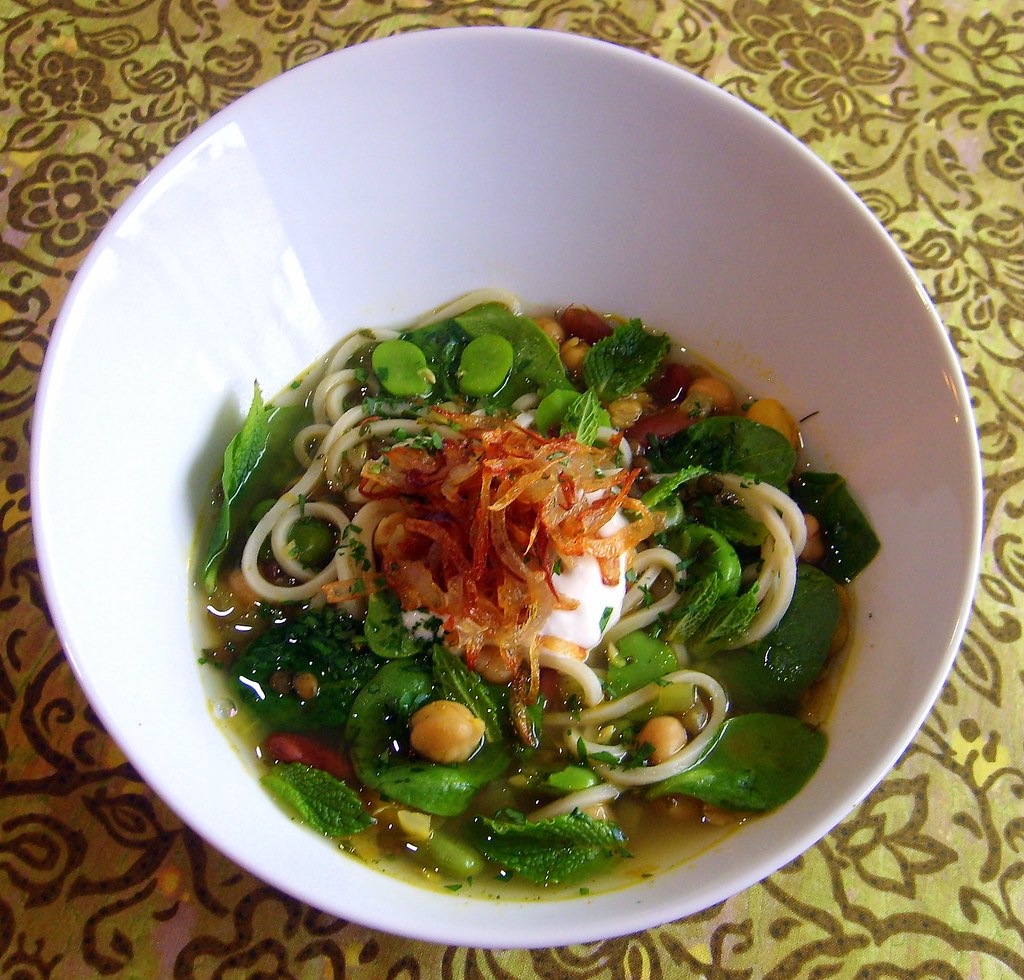
Ash-e-Reshteh (Persian Noodle Soup)

Ash-e-Reshteh is traditionally served in March during Nowruz, the Persian New Year, but I could eat this soup anytime, especially since we're having March-like weather in June.  This soup is so healthy.  It's full of protein, fiber and antioxidants with all of the legumes, leafy greens and herbs.  And it actually tastes better the following day, but that assumes you will have leftovers, which I doubt you will.

The key to making this soup is not to overcook the greens to keep the flavors and colors fresh and vibrant.  I added the leafy greens to each individual serving bowl and ladled the hot soup over top.  The temperature of the soup wilts the greens slightly, and retains their beautiful color and texture. 

Ingredients:
(Serves 4)

1 large onion, diced small
4 cloves garlic, minced
1 tsp ground turmeric
3/4 tsp ground cumin
1/2 tsp paprika
1/3 cup dried white beans, or 1 cup canned
1/3 cup dried kidney beans, or 1 cup canned
1/3 cup dried chickpeas, or 1 cup canned
1/4 cup dried green lentils
10 cups vegetable stock
1 cup fresh fava beans, blanched and peeled
2 tbsp fresh dill, finely chopped
2 tbsp fresh cilantro, finely chopped
3 tbsp fresh parsley, finely chopped
3 tbsp fresh mint, finely chopped (plus leaves for garnish)
1 bag baby spinach leaves
8 oz thin egg-free noodles.  I used fresh Ramen noodles.
Kosher salt and freshly ground black pepper to taste
2 tbsp extra virgin olive oil
1/4 cup Follow Your Heart, Sour Cream
2 large shallots, thinly sliced
Juice of 1/2 lemon

Method:
  • If using dried beans, soak overnight in individual bowls, drain soaking water, add fresh water to cover and cook beans separately until tender, making sure not to overcook.  Drain beans and set aside.  You don't need to soak the lentils overnight, they take only 20 minutes to cook.  If using canned beans, rinse and set aside.
  • In a large stock pot or dutch oven, heat 1 1/2 tbsp olive oil and cook onions and garlic until soft.  Add spices, vegetable stock, beans/lentils (except fava beans), herbs, salt and pepper to taste and bring to a boil.  Reduce heat to a simmer and cook for about 30 minutes.
  • While soup is cooking, cook shallots in remaining olive oil until caramelized and set aside.
  • Cook noodles according to package directions, drain and keep warm until ready to use.
  • Blanch fava beans for about 1 minute, peel skins and set aside.
  • Portion out noodles into bowls, add a handful of spinach and a 1/4 cup of blanched fava beans to each bowl.  
  • Ladle over hot soup and garnish with sour cream, shallots, mint leaves, minced herbs and a squeeze of fresh lemon juice.  Enjoy!


Tuesday, April 19, 2011

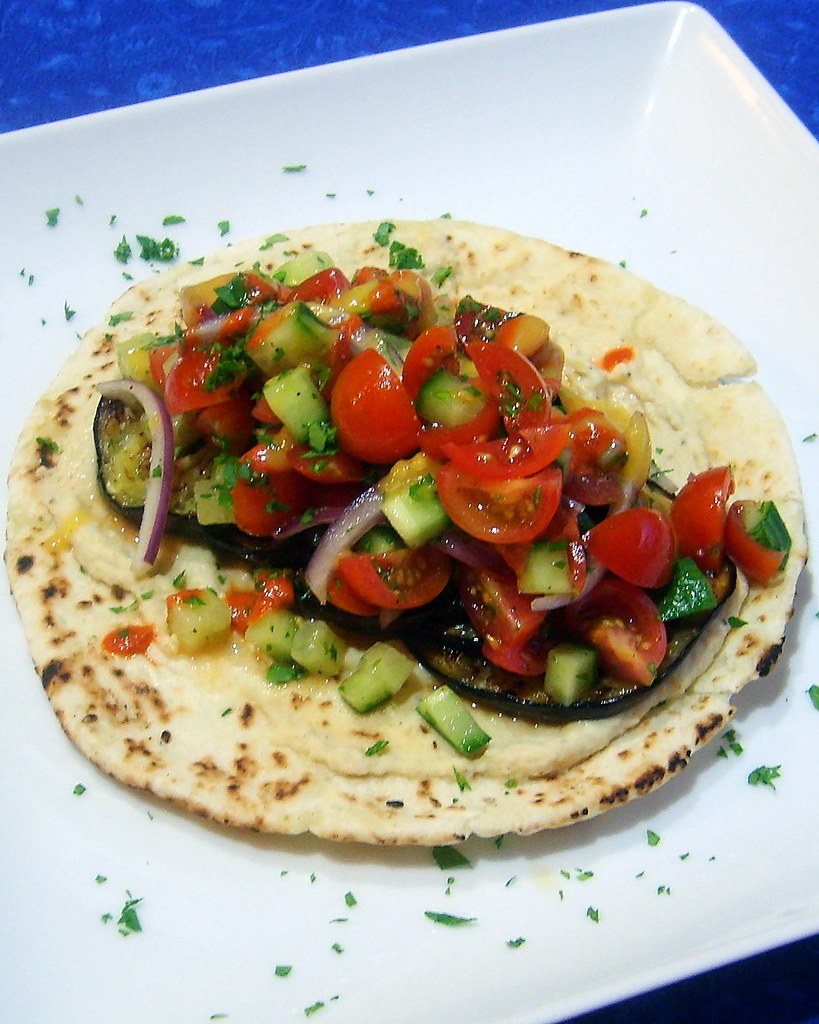
Sabich (Israeli Fast Food)

I can't tell you how many times I've eaten falafels.  I love them, but I don't like the fact that they are deep fried!  So I end up making them at home.  Still, I have a hard time resisting and a new falafel restaurant is opening two miles from my house and so I'll have to go and check it out.

In the meantime, this Sabich Grilled Eggplant pita that I made for dinner last night is my new go to favorite!  I can't believe that I've never made this before--the flavors are just amazing together.  It's smokey, spicy, tangy, crunchy and so simple to make.  And for those of you who don't like eggplant, this will convert you!


Ingredients:

1 large globe eggplant, sliced thinly into rounds
8 oz plain hummus spread
1 pt cherry tomatoes, cut into quarters
1/2 large English cucumber, diced small
1/2 red onion, sliced thinly
2 tbsp parsley, finely minced
1/4 cup extra virgin olive oil
Juice of 1/2 lemon
Salt and pepper
Harissa sauce or Sriracha hot sauce
Amba, pickled mango sauce or diced kosher pickles
4 pita flatbreads

Note:  You can make the hummus from scratch, like I did.  You just need a food processor, cooked chickpeas, fresh garlic, tahini sauce, cumin powder, lemon juice and salt and pepper.  However, there are a lot of good brands of hummus in the grocery stores, so find a brand that you like and use it.  I also made my own harissa, a North African hot sauce, but you can purchase that as well, or use Sriracha or any hot sauce you like.   The one ingredient that I hope you can find for this dish is the Amba.  I've never tasted anything like it before and it is very hard to describe.  It's pungent, spicy, sweet, sour and salty and when mixed with the other ingredients in the wrap it goes so well together.   If you can't find it at a Middle Eastern market, then just purchase kosher dill pickles and dice them.  I also blended my Amba with a little water in the blender to create a sauce instead of using it right out of the jar.

Method:
  • Slice eggplants thinly 1/8"-1/4" rounds.  Brush both sides of eggplant lightly with olive oil and sprinkle with salt and pepper.  Heat a flat griddle iron on medium-high heat and brush lightly with olive oil and place eggplant slices on the griddle.  Cook on both sides until golden brown.  Place on paper towels to remove excess oil.  Set aside.  
  • Combine cut tomatoes, diced cucumber, sliced red onion and minced parsley in a bowl and toss with lemon juice, a drizzle of olive oil and salt and pepper.
  • Heat pita bread in the oven or a toaster oven until warm and soft and brush lightly with olive oil.
  • Layer the pita starting with the hummus, eggplant, tomato-cucumber salad, hot sauce and finish with the Amba or pickles. 
  • You can also finish with a drizzle of tahini sauce if you wish.
  • Just delicious!!! 


Wednesday, April 6, 2011

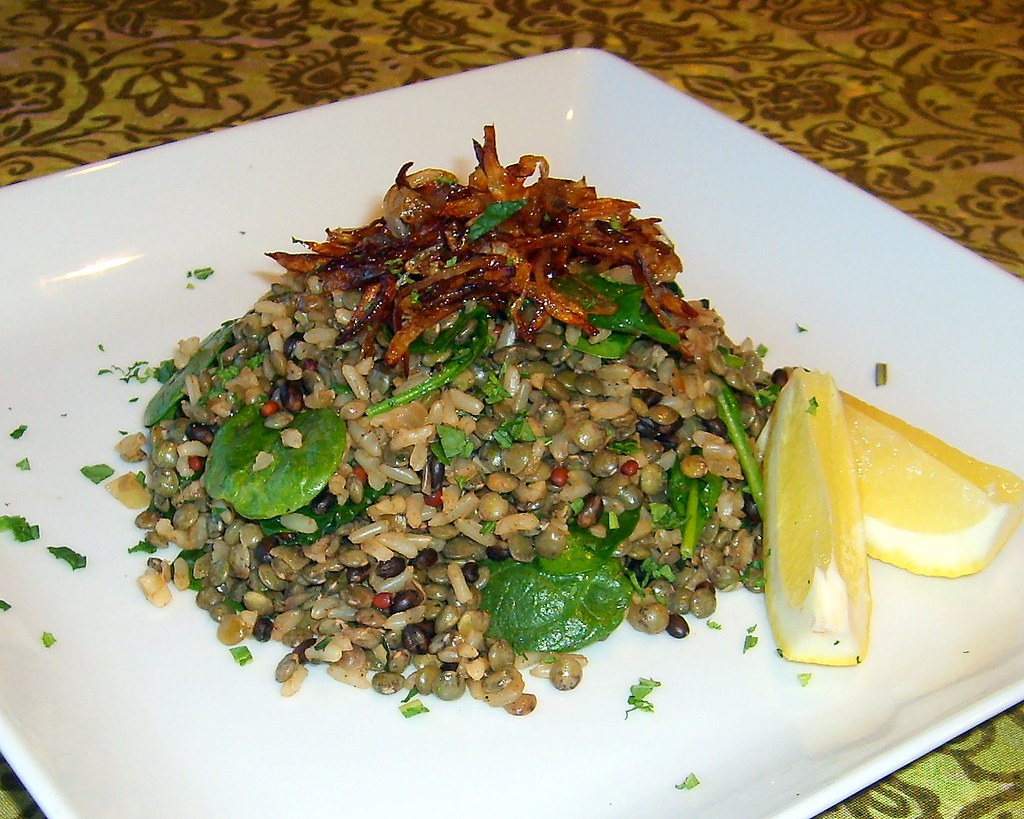
Mujaddara (Lentil & Rice Pilaf)

Mujaddara is a perfect dish for vegans to eat because the lentils and the rice combined together create a complete protein containing all the essential amino acids our body needs to build new cells.  So not only is this dish delicious and comforting, it's incredibly nutritious as well. 

This simple peasant dish has been around for thousands of years and is mostly eaten in the Middle East.  I remember when I worked for a high-tech company 12 years ago, there was this small Middle Eastern cafe that served the best Mujaddara I've ever tasted.  I would eat it practically every day for lunch and was bummed when they closed on weekends because they only catered to the corporate crowd.  So I started making it at home and have been eating it ever since.  I usually serve this with Tahini Mint Sauce, but you can serve it plain or with a Pomegranate Vinaigrette drizzled on top.  This dish is delicious, nutritious and inexpensive and can be either enjoyed hot or cold anytime of the year!


Ingredients:

1 1/4 cups French green lentils
1 cup brown basmati rice.  (I use a brown rice medley from Trader Joe's that contains long-grain brown rice, black barley and daikon radish seeds.)
1 medium onion, finely diced
3-4 garlic cloves, minced
1/2 cup of vegetable stock
1 1/2 tsp ground cinnamon
1 1/2 tsp ground cumin
1/3 cup mint, finely chopped
2 cups packed baby spinach
2 large shallots, thinly sliced
Juice of 2 lemons
Salt & Pepper to taste
2 tbsp olive oil divided
Lemon wedges and chopped mint for garnish
Tahini mint sauce for drizzling

Method:
  • Cook lentils in a large pot of simmering water just until tender for about 15-20 minutes.  Do not over cook.  Drain and set aside.
  • Cook rice according to package.  With any brown rice, I use a 2:1 ratio of water to rice.  I like my rice to have structure and crunch.
  • While rice and lentils are cooking add 1 tbsp of olive oil to a large frying pan and caramelize the onions until golden brown.
  • Add garlic and saute for a minute but be careful not to burn.
  • Add vegetable stock, cinnamon, cumin, and cook until almost all stock is evaporated.
  • Add drained lentils, brown rice, spinach, chopped mint, lemon juice and salt and pepper to taste.  Stir to combine and cook on low until spinach is slightly wilted and pilaf is hot.  Set aside.
  • In another small saute pan on medium heat, add the remaining 1 tbsp olive oil and caramelize shallots until golden brown.
  • Garnish pilaf with caramelized shallots, mint and pass the Tahini sauce on the side for drizzling. 

Tuesday, March 29, 2011

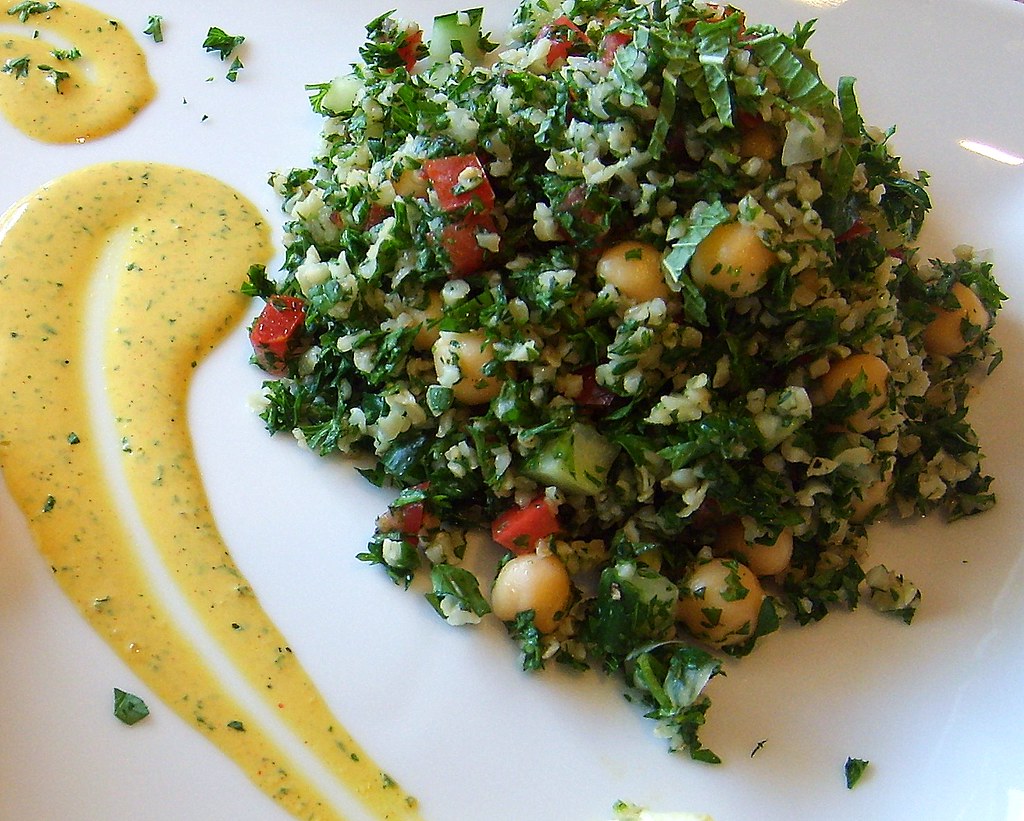
Tabbouleh Salad with Tahini Mint Sauce

Tabbouleh salad is one of my favorite salads and is incredibly healthy too!  Because the salad contains large amounts of parsley it is loaded with anti-oxidants, vitamins and minerals.  And with the addition of chickpeas it is a good source of protein and fiber.  I eat Tabbouleh salad just about every day for lunch...whether I make it myself or purchase it from Whole Foods Market, I just can't get enough of it!  I like to serve it as a side dish with falafels, hummus and whole wheat pita bread or lavash.


Salad Ingredients:

1 1/2 cups finely chopped parsley (rinse really well and dry in a salad spinner or paper towels before chopping)
1 1/2 cups cooked bulgur wheat
1/2 cup finely diced English cucumber with skin
1/2 cup seeded, finely diced tomatoes
1/4 cup finely chopped mint (rinse and dry really well)
1 cup cooked chickpeas, drained and dried
Juice from two lemons
1 tbsp red wine vinegar
3-4 tbsp extra virgin olive oil
1/2 tsp salt (or more to taste)
1/4 tsp freshly ground black pepper

Method:
  • Bring a cup of water to boil, place the bulgur in a bowl and cover with water.  The water should cover the bulgur 1/8 - 1/4 inch.
  • Cover bowl with a plate and let rest for 30-40 minutes.
  • Fluff with a fork.  If there is any water remaining after sitting, drain the bulgur really well and then pat dry on a paper towel.
  • Mix all dry ingredients in a bowl and season with salt and pepper.
  • Add lemon juice, red wine vinegar and olive oil.
  • Let Tabbouleh sit in the refrigerator for about an hour for the flavors to develop.  Taste and adjust seasons if necessary.
Tahini-Mint Sauce:

3 tbsp Tahini sauce/paste
Juice of three lemons (or to taste)
1/4 cup chopped mint
1 tbsp Vegenaise or Follow Your Heart sour cream
1/2 tsp tumeric powder
1/2 tsp garlic powder
1/2 tsp paprika
2 tbsp non dairy milk
Salt and pepper to taste
Water to thin to desired consistency

Method:
  • In a food processor or blender, mix all ingredients until smooth and creamy.  Should have a consistency of heavy cream.
  • Adjust seasoning if necessary. 

ShareThis